Contents





Race day ultramarathon nutrition and hydration is a topic as vast and complex as the distances we run. The strategies that work perfectly for marathons and triathlons often fail spectacularly in ultramarathons.
Why?
Because ultras introduce variables that shorter races don’t—massive altitude changes, extreme weather swings, technical terrain, dramatically shifting intensity levels, and sheer duration that tests every system in your body.
Before I dive in, let me be transparent: I’m not a certified nutritionist.
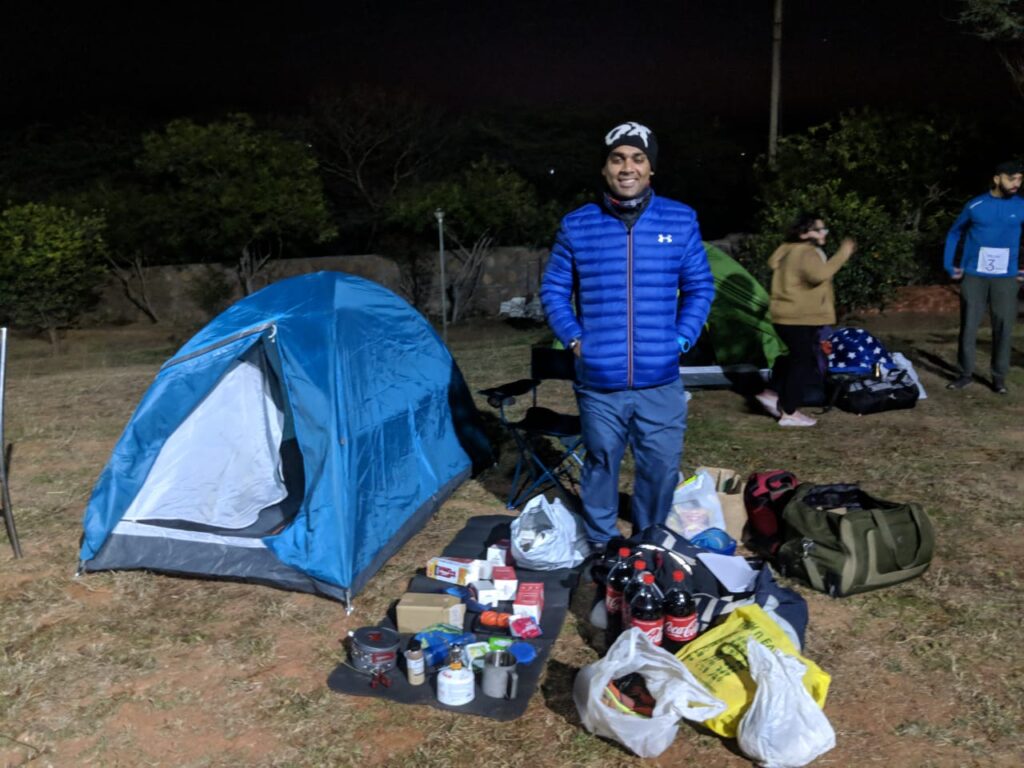
But I am a finisher of three 100 km ultras, several 50 km races, a 12-hour stadium run, 12 hours at Last Man Standing , consecutive days ultra distance at Garhwal Temple Run and ran the Garhwal Runs 74 km mountain race twice. There have been a couple of DNFs as well.
And I had been selected to run the prestigious UTMB CCC, back in 2018, but could not go because of some visa issue.
Through years of trial, error, success, and spectacular nutritional failures, I’ve learned what works for my body during these brutal events.
What I’m sharing comes from personal experience, extensive reading, conversations with other ultra-runners, and increasingly, scientific research that’s finally catching up to this sport.
My strategies have successfully carried me through some incredibly challenging races.
Can you take hints from my approach? Absolutely.
Will everything work exactly the same for you? Probably not.
However, understanding the principles of ultramarathon nutrition and seeing real-world applications will give you a starting point for your own trial and error to dial in your personal plan.
Why Nutrition and Hydration Matter (More Than You Think)
Let me be brutally honest: ultrarunning is an eating and drinking contest with some running thrown in.
If you’re moving for 5, 10, 24, or even 48+ hours over mountains, trails, or deserts, what you put in your body matters more than almost anything else.
The DNF Connection
Improper race day nutrition and hydration strategy are among the leading causes of Did Not Finish (DNF) outcomes.
Research analyzing 161 km ultramarathon participants found that gastrointestinal distress and nutrition-related issues forced numerous withdrawals, even among well-trained athletes.
You can have perfect physical training.
You can have flawless race strategy.
You can pace yourself brilliantly.
But all of it comes crashing down if your nutrition and hydration fail.
I’ve watched incredibly fit runners—people who could run circles around me in training—drop out of races because they couldn’t keep food down. Or they bonked from inadequate fuel. Or they developed hyponatremia from hydration mismanagement.
In my first 100 km race, Bhatti Lakes Ultra 2015, I came 2nd. You know why?
Because the balance runners i.e around 8 of them, DNFd due to variety of reasons but mostly due to improper nutrition and hydration.
The Energy Deficit Reality
Ultra-endurance events extending beyond 24 hours show energy expenditure between 13,000 and 17,750 calories. However, average energy intake typically covers only 36-53% of that expenditure.
This massive energy deficiency—sometimes exceeding 9,950 calories in elite athletes during a single race—significantly impacts both performance and health.
While you can’t completely eliminate this deficit during ultras (your gut simply can’t process enough calories), strategic nutrition minimizes the damage.
Failing to meet even basic energy requirements impairs performance, crushes recovery, suppresses immune function, and dramatically increases injury risk.
The Carbohydrate Challenge
Numerous studies have shown that ultramarathon runners consume far less carbohydrate than recommended.
Many average only 37 grams per hour—well below recommendation of 60-90 grams per hour for events lasting over 2.5 hours.
Carbohydrate oxidation remains the dominant energy source even in recreational well-trained runners, accounting for 70% or more of total energy expenditure during ultras.
When carbohydrate intake falls short, performance deteriorates rapidly regardless of fitness level.
Understanding the Science: What Your Body Needs
Before jumping into my personal strategies, let’s establish evidence-based principles that apply to all ultrarunners.
Carbohydrates: Your Primary Fuel
The International Society of Sports Nutrition recommends 5-8 grams of carbohydrate per kilogram of body weight daily during training phases, increasing to 8-12 g/kg/day before races.
During events lasting 3+ hours, target 60-90 grams of carbohydrates per hour using multiple-transportable carbohydrate sources (glucose + fructose combinations).
Why multiple carbohydrate types matter: Your gut can absorb approximately 60g/hour of glucose through one intestinal transport pathway.
Adding fructose (which uses a different pathway) allows you to absorb up to 90g/hour total—a 50% increase in available fuel.
Hydration: The Delicate Balance
Research on 161 km ultramarathons found that 67% of runners used “drink to thirst” as their primary hydration strategy, while 95.6% supplemented with sodium.
Average fluid intake during 24-hour races is approximately 378ml per hour, though some athletes consumed up to 673ml per hour.
Here’s the critical insight: weight loss greater than 2% doesn’t necessarily impair performance in ultras. Half of the top-10 finishers, in the study linked above, had lost more than 2% body weight by the 90 km mark.
However, drinking beyond thirst to prevent weight loss can lead to exercise-associated hyponatremia (EAH)—a potentially fatal condition.
The sodium connection: Plasma sodium concentrations below 135 mmol/L significantly increase hyponatremia risk. Most commercial sports drinks contain 460-575 mg sodium per liter—lower than typical sweat losses, making them a conservative baseline.
In hot conditions or long races, aim for 500-1,000mg sodium per hour.
The Protein Question
While carbohydrates dominate during-race nutrition, protein plays important roles in ultra-endurance events lasting many hours.
Small amounts of protein (0.2-0.4g per kg body weight) consumed with carbohydrates may improve glycogen resynthesis and reduce muscle damage, particularly during events extending beyond 6-8 hours.
Gastrointestinal Distress: The Silent Killer
Studies on 24-hour ultramarathoners report gastrointestinal symptoms in 65-96% of participants, with nausea and vomiting being most common.
Between 23-36% of non-finishers in a 161 km ultra attributed their DNF specifically to nausea and vomiting.
Your gut has limits. Blood flow shifts away from your digestive system to working muscles during exercise, reducing your stomach’s ability to process food.
The longer and harder you run, the more compromised digestion becomes. This is why nutrition strategy must balance caloric needs against digestive capacity.
My Personal Ultramarathon Nutrition Strategy: Before, During, and After

Over years of experimentation, I’ve developed a race day nutrition approach that works reliably for my body. Remember: this is one runner’s solution.
Use it as a template, not a prescription!
Before the Race: The Final 24 Hours
– 8-10 hours before start (dinner the night before):
I keep it simple and familiar—boiled rice, dal (lentils), and vegetables.
Nothing fancy like pasta or noodles because I don’t regularly eat those foods at home. Eating unusual foods before a race is asking for digestive trouble.
Important note: I skip roti (Indian flatbread) entirely because wheat doesn’t help me clear my stomach in the morning.
This is personal—many runners do fine with wheat, but I’ve learned my digestive system prefers rice.
Why simple carbohydrates: Complex meals take longer to digest. The night before an ultra, you want easily digestible carbohydrates that fuel glycogen stores without sitting heavy in your stomach.
Explore more : Carb Loading Before Marathon: Complete Indian Runner’s Guide (Fueling with Desi Foods)
– 2-3 hours before start:
For early morning starts: I wake up, eat a bowl of oats with soy milk, nuts, and peanut butter, then go back to sleep for another hour or two. This timing ensures the food is partially digested before I start running but still provides readily available fuel.
For evening/afternoon starts: Plain boiled rice with dal and maybe some vegetables. Again, nothing spicy that could upset my stomach during the race.
Why this timing: Eating 2-3 hours before allows sufficient digestion time. Your stomach won’t be full and uncomfortable, but you’ll have topped off glycogen stores and have food moving through your system to provide energy.
– 45-60 minutes before start:
A couple of plain toast slices with peanut butter, or a banana smeared with peanut butter.
This final small snack provides immediately accessible carbohydrates and a bit of fat for sustained energy.
Some runners prefer a pre-race electrolyte drink 15 minutes before starting. I sometimes use these, depending on weather conditions and how I’m feeling.
Read : The Ultimate Indian Marathon Nutrition Guide: What to Eat Before Race Day
During the Race: The Critical Hours
This is where ultramarathon nutrition gets complex and highly individual. Here’s what works for me-
– Hours 1-5: Gels and Real Food Combination
Every hour I consume:
- One energy gel (approximately 110 calories, 25g carbohydrates)
- Half a banana from aid stations (approximately 50-60 calories, 13-15g carbohydrates)
- Other small items from aid stations (couple of salted chips, salted dates)
Total per hour: 150-200 calories, approximately 40-50g carbohydrates
I prefer espresso/coffee-flavored gels because the caffeine provides mental alertness along with energy.
– Hydration during hours 1-5:
- One 500ml bottle of water per hour
- Sipping every 5-10 minutes (not chugging large amounts)
- One electrolyte/salt capsule per hour in hot conditions
- Small cup of oral rehydration solution (ORS) occasionally for electrolyte replenishment
Read : Keto Diet for Runners: Complete Guide with Indian Desi Foods
Why this approach works:
The combination of gels (fast-absorbing simple sugars) and real food (banana provides potassium, additional carbs, and satisfies the craving for actual food) keeps both energy and morale high.
Gels alone become unpalatable after hours of running. Bananas taste fresh and provide textural variety your palate craves.
Critical hydration note: Sipping frequently rather than gulping prevents the uncomfortable sloshing sensation and improves absorption.
Research shows that steady fluid intake optimizes hydration better than irregular large-volume consumption.
Explore more : Hydration And Electrolytes for Runners: What Actually Speeds Recovery After Hard Runs
– Hours 5-10+: Transition to Heavier Fuel
After 5-6 hours of running, my body and mind rebel against more gels. The sweet, sticky texture becomes nauseating.
This is when I transition to alternative fuel sources.
What I switch to:
- Electrolyte drink mix (approximately 134 calories per serving with balanced electrolytes)
- Nut butter packets (250-300 calories, provides fats and protein along with carbs)
- Trail mix (nuts, dried fruit, seeds)
- Gajak (traditional Indian sweet made from jaggery and peanuts)—this has been surprisingly effective for me
Why the switch matters:
Research on 24-hour ultramarathons shows that longer events allow for more solid food consumption because running intensity is lower, permitting better digestion.
As your pace slows (which inevitably happens in ultras), your gut can handle denser, more calorically-concentrated foods.
Fat becomes increasingly important as an energy source during ultra-long events.
While carbohydrates remain crucial, adding fats provides sustained energy and helps prevent the rapid blood sugar spikes. And also prevent crashes that pure carbohydrate consumption can cause.
The solid meal strategy:
Post 5-6 hours, I actively look for solid meals at aid stations—rice with dal if provided by race organizers. I always check beforehand what food will be available.
For example: At Garhwal Runs 74 km race, I carried poha (flattened rice) in my child’s tiffin box(I kept it in my drop bag) and ate it at the 47 km aid station.
The relief to my stomach and the change in taste were incredible. That meal mentally reset me for the remaining distance.
Caffeine during night hours:
During overnight running portions (midnight to early morning), when I tend to doze off while moving, I increase gel consumption specifically for the caffeine boost.
That energy rush and mental alertness from caffeine becomes crucial for safety and forward progress during the sleepy hours.
– Hydration hours 5-10+:
Continue with approximately 500ml water per hour, adjusting based on sweat rate, temperature, and how I feel.
In extreme heat, I may increase to 600-700ml per hour, while cooler conditions might allow 400-450ml.
One electrolyte/salt capsule per hour in hot conditions. Less frequently in cooler weather, but never skipping entirely.
A critical mistake I made: Once I overdid salt intake by taking a salt capsule AND drinking ORS for several consecutive hours. I developed swelling and burning sensation while urinating.
I immediately switched to plain water only for a few hours and the problem resolved. This taught me that more isn’t always better—balance is crucial.
After the Race: Recovery Begins
Immediately post-race, I’m typically not hungry for food but desperately thirsty.
Honestly? I’m craving a nice chilled beer! Well, I used as now I am a teetotaller!
Beyond that beverage celebration, I focus on aggressive rehydration for the next 2-3 days.
However, plain water isn’t sufficient for optimal rehydration after massive fluid losses. The sodium content of recovery drinks (targeting 1,400+ mg/L) significantly improves fluid retention compared to plain water.
Explore : These Recovery Tools For Runners Will Make You A Super-Hero
Recovery nutrition strategy:
Within 30-60 minutes of finishing, I aim to consume a recovery drink or meal containing carbohydrates and protein in a 3:1 or 4:1 ratio (approximately 220 calories with appropriate macronutrient balance). This supports glycogen resynthesis and initiates muscle repair processes.
Why this matters: Your body is uniquely primed for nutrient absorption immediately post-exercise. Taking advantage of this window accelerates recovery, reduces muscle damage, and prepares you for your next training session.
Read : Marathon Recovery Week Plan : Recover & Return to Running
Tips for Race Day Success

Beyond my personal approach, here are research-supported and experience-validated principles every ultrarunner should follow.
Tip #1: Monitor Urine Output and Color
If you’re peeing roughly every hour and the color is pale to light yellow, your hydration is generally adequate.
Don’t forget to actually look—darker urine indicates insufficient fluid intake.
However, peeing too frequently (every 20-30 minutes) or having completely clear urine might indicate overhydration. Research shows this significantly increases hyponatremia risk, particularly when drinking plain water without adequate sodium.
Also don’t forget to urinate entirely. That means you are not hydrating properly.
Tip #2: Never Try Anything New on Race Day
This cannot be overstated. Every gel flavor, every energy bar, every electrolyte drink, every piece of food you consume during a race should have been tested multiple times during training runs.
Your gut behaves differently under race stress and intensity compared to training.
Food that sits fine during a relaxed training run might cause nausea or GI distress during an actual race. Test everything beforehand.
Read : Long Run Training Guide: Master Marathon Training’s Key Workout
Tip #3: Nibble, Don’t Stuff
In the enthusiasm of maintaining energy, many runners make the critical mistake of eating too much too quickly.
Your digestive system is already compromised during running—overwhelming it with large volumes of food causes bloating, nausea, and vomiting.
Nibble small amounts constantly rather than gorging at aid stations.
Tip #4: Dilute Your Gels
Always drink plenty of water after consuming energy gels. Gels are highly concentrated carbohydrate sources that need dilution in your stomach to be effectively absorbed and provide energy.
Consuming gels without adequate fluid can cause cramping and GI distress.
Many runners aim for 150-250ml of water with each gel.
Tip #5: Use Carbonated Drinks Strategically
When you’re experiencing bloating or your nutrition plan is failing (taste fatigue, nausea), a small amount of soft drink or other carbonated beverage can help.
The carbonation can settle your stomach and provide a welcome taste change.
Coca-Cola is famously popular at ultra aid stations for good reason—the sugar provides quick energy, the caffeine offers a boost, and the carbonation can ease gastric discomfort.
Just use it strategically, not as your primary fuel source.
Tip #6: Have a Comfort Food Backup
When your carefully planned nutrition strategy inevitably fails (and it will at some point), have a backup food you know will never fail you.
For me, it’s poha.
For others, it might be boiled potatoes, pretzels, peanut butter sandwiches, or whatever they can always stomach.
Identify your comfort food through training and ensure you have access to it during the race, either by carrying it or knowing which aid stations will have it.
Tip #7: Plan Your Aid Station Visits
Before entering each aid station, have a clear mental plan of what you’ll eat and drink.
This reduces time spent at aid stations and prevents getting overwhelmed by options.
Tip #8: Train Your Gut
Practice your nutrition and hydration plans during weekly long runs.
Your gut is trainable—regular practice with race-day nutrition increases your stomach’s ability to process food while running.
Studies demonstrate that athletes who practice race nutrition during training report fewer GI issues during actual races compared to those who don’t.
Tip #9: Match Intensity to Nutrition Type
Longer ultras at lower intensity allow easier digestion of solid foods.
Shorter, faster ultras require more reliance on easily digestible options like gels and drinks.
A 100 km mountain ultra at slow, hiking-interspersed pace permits solid meals. A 50 km trail race at harder intensity necessitates primarily liquid and gel-based nutrition.
Tip #10: Keep It Simple
Don’t break down your nutrition plan to exact grams and ounces.
Overly complicated strategies are difficult to execute when exhausted, hypoxic at altitude, or dealing with changing conditions.
Simple, flexible guidelines (“eat something every 30-45 minutes, drink every 10-15 minutes”) work better than rigid protocols.
Tip #11: Seasonal Foods Are Your Friend
Oranges and watermelon taste incredibly good when it’s hot outside.
Aid stations in summer ultras often provide these—take advantage.
The high water content aids hydration, the natural sugars provide energy, and the fresh taste provides mental relief.
Tip #12: Keep a Training Food Log
Document what you eat and drink during long training runs.
Note what worked, what didn’t, when you felt good, when energy flagged. This information is invaluable for formulating your race day plan.
Tip #13: Don’t Rely on Aid Stations Alone
During my first 100 km race at Bhatti Lakes Ultra, in fact first ever ultra, I relied on aid station food. And I paid for it heavily with multiple visits to the bushes and being hungry most of the time!
Aid station food is an add-on, not your primary nutrition source.
Always carry sufficient personal nutrition to complete the race even if aid stations had nothing you could eat.
Check beforehand what aid stations will provide, but don’t depend on it.
Stations run out of items. What they have might not work for your stomach.
Take responsibility for your own fueling.
Special Considerations for Indian Ultrarunners
Running ultras in India presents unique nutritional challenges and opportunities that international resources often don’t address.
– Working with Indian Aid Station Food
Many Indian ultras provide traditional foods at aid stations—idli, banana, biscuits, ORS, fruits. These can be excellent fuel if you’re accustomed to them.
Foods that work well:
- Idli (easy to digest, good carbs, familiar)
- Banana (potassium, carbs, gentle on stomach)
- Biscuits (quick energy, easy to carry and eat)
- Poha (light, digestible, traditional comfort food)
- Gajak/chikki (traditional energy-dense snacks)
- Coconut water (natural electrolytes)
Foods to be cautious with:
- Heavy, oily samosas or pakoras (too rich for racing)
- Overly spicy preparations (GI distress risk)
- Deep-fried items (digestion issues)
- Heavy dals or curries unless you’ve trained with them
Read : Healthy Eating While Traveling for Runners: Complete Guide
– Climate Considerations
Monsoon races (July-September): Humidity makes hydration more critical. Sweat doesn’t evaporate well, so you feel hotter and may drink more. Be extra vigilant about sodium intake to prevent hyponatremia.
Summer races (March-May): Extreme heat requires increased fluid and electrolyte intake. Performance declines significantly when temperatures exceed 30-35°C. Adjust expectations and increase nutrition frequency.
Winter/cool season races (November-February): Lower fluid needs but don’t under-hydrate. Cold can suppress thirst sensation even as you lose fluids. Pay attention to sodium as well—you still sweat in cold weather.
– Altitude Races (Ladakh, Himachal, Uttarakhand)
Racing at altitude (above 2,500-3,000 meters) creates additional nutritional challenges:
Increased energy expenditure: Your body works harder at altitude, increasing caloric needs.
Decreased appetite: Altitude often suppresses appetite, making it harder to consume adequate calories.
Fluid requirements: You lose more fluid through respiration at altitude due to dry air and increased breathing rate.
Strategy adjustments:
- Force yourself to eat even when not hungry
- Choose easily digestible options
- Increase fluid intake beyond what thirst indicates
- Consider liquid calories (they’re often easier to consume than solid food at altitude)
Common Ultramarathon Nutrition Mistakes (And How to Avoid Them)
Even experienced ultrarunners make these errors. Learning from others’ mistakes is cheaper than making them all yourself.
Mistake #1: Under-Fueling Early
The problem: Trying to “save” your stomach or calories for later in the race. You feel fine for 3-4 hours, then crash hard when glycogen depletes.
The solution: Start fueling early (within first 30-45 minutes) and maintain consistent intake.
Mistake #2: Over-Drinking Plain Water
The problem: Believing “more hydration is better” and chugging excessive plain water, leading to hyponatremia.
The solution: Drink to thirst as your primary guide. Use electrolyte drinks or take salt capsules rather than plain water exclusively.
Mistake #3: Neglecting Sodium Entirely
The problem: Assuming hydration alone is sufficient. Sweat contains 900-1,500mg sodium per liter. Over hours, massive sodium losses occur even with perfect fluid intake.
The solution: Consume 500-1,000mg sodium per hour through electrolyte drinks, salt capsules, or salty foods. Higher amounts in extreme heat or if you’re a heavy/salty sweater.
Explore more : Balanced Diet for Athletes(Indian Food) : Achieve Peak Performance
Mistake #4: Eating Only Gels/Processed Foods
The problem: Relying exclusively on gels, bars, and drinks for 8+ hours causes taste fatigue and often GI distress. Your body and mind crave real food texture and flavors.
The solution: Mix real food (bananas, potatoes, bread, rice) with processed nutrition. Research shows longer ultras permit solid food consumption, and successful runners report better tolerance when using variety.
Mistake #5: Trying New Products During the Race
The problem: Thinking “how different can one gel brand be from another?” Very different, as you discover when that new flavor causes nausea at kilometer 40.
The solution: Test everything multiple times in training before race day. If aid stations provide unfamiliar products, stick with what you brought rather than experimenting.
Mistake #6: Ignoring Early GI Warnings
The problem: Pushing through mild nausea or bloating, thinking it’ll pass. Often it worsens until you can’t eat anything, leading to bonking or DNF.
The solution: At first signs of GI distress, immediately slow down, switch to different nutrition types, or take a brief walking break to let your stomach settle. Address issues early before they become race-ending.
Mistake #7: Not Adjusting for Conditions
The problem: Executing the exact nutrition plan you practiced in training despite race day being 15°C hotter or 2,000 meters higher in altitude.
The solution: Adjust fluid and sodium intake for temperature. Reduce solid food complexity at altitude. Be flexible and responsive to actual conditions rather than rigidly following a plan created under different circumstances.
Explore : Keto Diet for Runners: Complete Guide with Indian Desi Foods
The Science of What Can Go Wrong (And How to Prevent It)
Understanding common ultramarathon nutrition problems helps you prevent or quickly address them during races.
Exercise-Associated Hyponatremia (EAH)
What it is: Low blood sodium concentration (below 135 mmol/L), caused by excessive plain water intake relative to sodium losses through sweat.
It happened with me and it is not a very comfortable feeling!
Symptoms: Nausea, confusion, disorientation, headache, swelling of hands/feet. Severe cases can cause seizures, coma, and death.
Prevention:
- Don’t force fluid intake beyond thirst
- Use electrolyte drinks or salt tablets
- Aim for 500-1,000mg sodium per hour in long races
- Monitor for hand/ring swelling (early warning sign)
Research insight: Studies show EAH occurs in 7-10% of ultra-finishers, with highest risk among slower runners who have more time to accumulate excessive fluid intake.
Bonking (Glycogen Depletion)
What it is: Complete depletion of muscle and liver glycogen stores, causing sudden, severe fatigue.
Symptoms: Extreme weakness, inability to maintain pace, confusion, light-headedness, overwhelming desire to sit or lie down.
Prevention:
- Start fueling early (within first 30-45 minutes)
- Maintain 60-90g carbohydrate per hour
- Don’t under-eat early trying to “save” your stomach
Recovery: If you bonk, you can partially recover by consuming fast-acting carbohydrates (gels, sugary drinks) and slowing pace dramatically, but full recovery takes time and you’ll lose significant race time.
GI Distress
What it is: Nausea, vomiting, diarrhea, bloating, or cramping affecting your ability to eat and continue running.
Causes:
- Eating too much too quickly
- Dehydration or overhydration
- Running too hard (blood diverted from gut)
- Certain food intolerances
- Heat stress
- NSAID use (ibuprofen, etc.)
Prevention:
- Train your gut with race nutrition during long runs
- Eat small amounts frequently rather than large servings
- Avoid NSAIDs before and during races (research shows they increase GI distress risk)
- Slow down if early symptoms appear
- Switch between solid and liquid nutrition
Management: If GI distress occurs, then do the following-
- immediately slow to a walk,
- stop eating solid food temporarily,
- sip small amounts of electrolyte drink or flat cola, and
- allow your stomach to settle before resuming eating.
Muscle Cramping
What it is: Sudden, painful muscle contractions, typically in calves, hamstrings, or quads.
Causes: Still debated, but likely factors include muscle fatigue, electrolyte imbalances (particularly sodium, potassium, magnesium), and dehydration.
Prevention:
- Adequate sodium intake (500-1,000mg per hour)
- Proper hydration without overdrinking
- Adequate training preparation for race distance
- Magnesium supplementation for those prone to cramping
Research insight: A study found that cramping was associated with faster running pace rather than dehydration or electrolyte imbalances, suggesting neuromuscular fatigue as the primary cause.
Management: When cramping occurs, do the following-
- slow down or walk,
- gently stretch the affected muscle,
- increase electrolyte intake, and
- reduce intensity
Final Thoughts: Your Journey to Dialed-In Ultramarathon Nutrition
Ultramarathon nutrition is simultaneously simple and incredibly complex.
The basic principles—eat enough carbohydrates, stay adequately hydrated, replace electrolytes—are straightforward.
I’ve shared my personal approach honestly, including mistakes I’ve made. You’ll undoubtedly make your own mistakes as you develop your strategy.
That’s not just normal—it’s necessary.
Each training run and race teaches you more about your body’s unique needs and limitations.
Nutrition can make the difference between finishing strong and not finishing at all.
It deserves the same attention and training as your physical preparation.
Invest time developing your strategy, practice it religiously during training, and trust what you’ve learned when race day arrives.
Remember: in ultrarunning, those who dial in their nutrition don’t necessarily win, but those who don’t will almost certainly struggle or fail to finish.
Now go out there, test these principles, find what works for your unique body, and use that knowledge to fuel yourself through the incredible journey of ultramarathon running.
What’s your race day ultramarathon nutrition and hydration strategy? What’s been your biggest struggle with eating and drinking during ultras?
Share your experiences—we all learn from each other’s trials and successes.
Till then, stay fit, keep training your gut, and keep running those impossible distances.