Contents





Are ice baths and cold showers worth it for recovery? Discover cold water immersion benefits, muscle growth concerns, optimal protocols, and when cold exposure recovery helps or hurts your training goals.
Scroll through fitness social media and you’ll see influencers submerged in ice baths, athletes praising cold plunges, and Wim Hof devotees championing freezing showers.
The cold therapy market exploded from $8 billion in 2022 to a projected $12.34 billion by 2030.
But does the science support the hype?
The answer is surprisingly complex—cold water immersion offers legitimate benefits for some situations while potentially sabotaging others.
Understanding when ice baths help versus hurt determines whether this trendy recovery method belongs in your routine.
What Latest Research On Cold Exposure Recovery Actually Shows
A comprehensive 2025 systematic review analyzing 11 randomized controlled trials with over 3,000 participants provides our clearest picture yet of cold water immersion effects. The findings challenge many popular claims while supporting others.
The Benefits That Hold Up
Research shows cold water immersion creates significant stress reduction 12 hours after exposure, though not immediately. A 29% reduction in sickness absence was observed among participants who took cold showers regularly, suggesting potential immune benefits from consistent practice.
Sleep quality and overall quality of life improved in participants using cold water therapy, though interestingly, mood did not significantly change despite widespread claims about cold exposure’s mood-boosting effects.
For acute muscle soreness, the evidence supports short-term relief.
A 2025 network meta-analysis of 55 studies found that cold water immersion at 11-15°C for 10-15 minutes effectively reduced delayed onset muscle soreness (DOMS), particularly within 24-72 hours post-exercise.
The Critical Downside Nobody Talks About
Here’s where cold exposure recovery therapy’s popularity crashes into scientific reality.
Multiple studies published between 2015 and 2025 consistently demonstrate that ice baths immediately after strength training significantly impair muscle growth.
Research from the Journal of Physiology found that cold water immersion attenuated long-term gains in muscle mass and strength while blunting the activation of key proteins and satellite cells in skeletal muscle for up to two days after strength exercise.
A 2024 meta-analysis in the European Journal of Sport Science concluded that cold water immersion may result in at least a small reduction of hypertrophy. Noting that while it doesn’t completely prevent muscle gains, it likely attenuates adaptations compared to resistance training alone.
The mechanism involves inflammation suppression. While reducing inflammation feels good and decreases soreness, it also disrupts the critical inflammatory response your body uses to repair and rebuild stronger muscles.
Essentially, ice baths make you feel better in the short term while undermining long-term adaptation.
The Inflammation Paradox

Understanding inflammation’s dual nature clarifies when cold therapy helps versus hurts.
When Inflammation Is Your Friend
After strength training, exercise creates microscopic muscle damage triggering inflammatory responses. This inflammation isn’t pathological—it’s adaptive.
Inflammatory molecules like IL-6 and TNF-alpha signal satellite cells to activate, initiate muscle protein synthesis, and begin the repair process that builds strength and size.
Blunting this inflammatory response with immediate ice baths essentially tells your body “never mind, we don’t need to adapt to that stress.” Research confirms this concern.
Studies measuring muscle biopsies show cold water immersion reduces muscle protein synthesis rates—the exact process you’re trying to maximize after lifting weights.
When Inflammation Is Your Enemy
Between competitions, inflammation becomes problematic.
If you’re running a marathon Saturday and another race Sunday, accumulated inflammation limits performance. Here, cold water immersion’s anti-inflammatory effects prove beneficial—reducing soreness and maintaining output for subsequent efforts.
Similarly, chronic inflammation from overtraining or insufficient recovery causes problems. In these cases, strategic cold exposure might help manage excessive inflammation without interfering with adaptation.
The key distinction:
- Acute, exercise-induced inflammation drives adaptation.
- Chronic, accumulated inflammation impairs recovery.
Explore more : HRV And Resting Heart Rate Recovery Indicators: Know When to Push or Rest
Cold Showers vs. Ice Baths: Practical Differences
Cold showers and ice baths occupy different points on the cold exposure recovery spectrum with distinct effects.
Cold Showers
Cold showers typically range from 10-20°C (50-68°F) and last 30 seconds to several minutes. They’re accessible, free, and require no special equipment beyond your willpower.
Research assigned over 3,000 office workers to add 30-, 60-, or 90-second blasts of cold water at the end of morning showers. After 60 days, workers taking cold showers reported 29% fewer sick days and increased energy levels, though the exact physiological mechanisms remain unclear.
Cold showers provide mild cold exposure—enough to trigger adaptation but not so intense as to create the deep cooling that affects muscle recovery mechanisms.
For general wellness without interfering with training adaptations, cold showers offer a reasonable middle ground.
Ice Baths and Cold Plunges
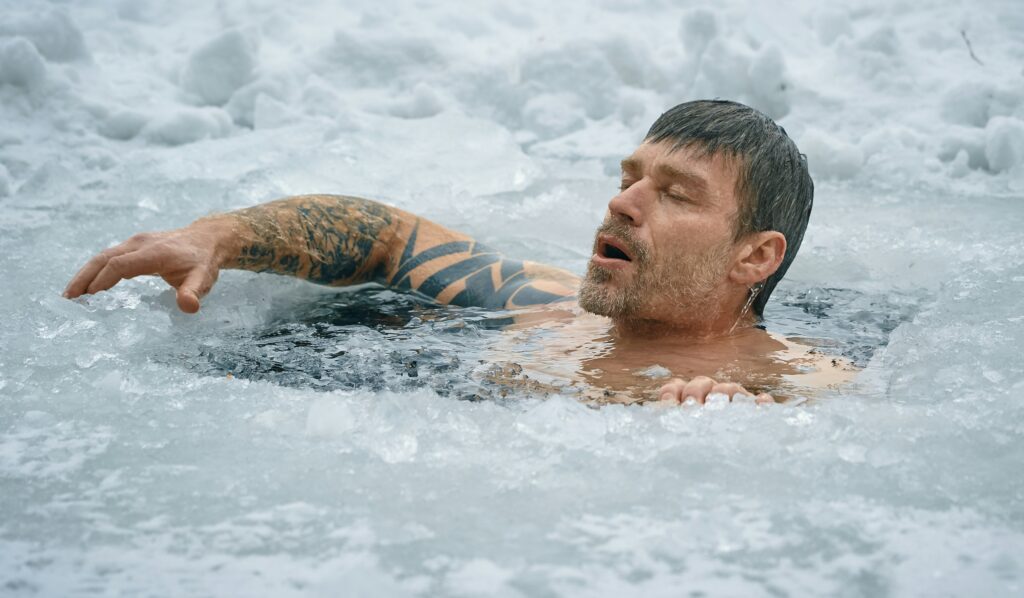
Ice baths involve full-body immersion in water below 15°C (59°F), creating more profound physiological effects. The intense cold causes significant vasoconstriction, dramatically reduces tissue temperature, and creates stronger systemic responses.
Research indicates medium-temperature protocols (11-15°C for 10-15 minutes) balance cooling effectiveness with comfort better than extremely cold water (5-10°C), which can cause discomfort, muscle tightness, or excessive vasoconstriction.
The deeper cold exposure from ice baths creates stronger anti-inflammatory effects—beneficial for managing soreness between competitions but potentially problematic for maximizing training adaptations.
Explore more : Running Recovery After 40: Every Masters Runner Must Follow
Optimal Protocols: If You’re Going to Do It
If cold water therapy fits your goals and training context, proper protocols matter.
Temperature and Duration
The evidence suggests 11-15°C (52-59°F) for 10-15 minutes provides optimal balance. Colder temperatures don’t necessarily produce better results and increase discomfort and potential risks.
Start conservatively if you’re new to cold exposure.
Begin with 30-60 seconds in cold showers, gradually working toward 2-3 minutes.
For ice baths, start at 15°C for 5 minutes before progressing to colder temperatures or longer durations.
Timing Considerations
Never take ice baths immediately after strength training if muscle growth is your goal. The research clearly shows this timing impairs adaptation.
If you lift weights and also want cold therapy benefits, separate them by at least 4-6 hours or save cold exposure for off days.
For endurance training, the timing concern is less critical. Cold water immersion after running or cycling doesn’t show the same adaptation-blunting effects observed with resistance training.
Between competitions or during tournament scenarios, ice baths immediately after events help manage soreness and maintain performance for subsequent efforts.
Frequency
Daily cold exposure isn’t necessary for most benefits.
The sickness absence study used just one cold shower burst daily.
For ice baths, 2-3 times weekly on recovery days or between hard training sessions provides benefits without excessive frequency.
Who Benefits Most From Cold Exposure Recovery Therapy

Cold water immersion isn’t universally beneficial. Your goals and training context determine whether it’s worth incorporating.
Athletes Who Should Consider It
Endurance athletes running high-volume training might benefit from occasional ice baths to manage accumulated inflammation without the muscle growth concerns affecting strength athletes.
Cold water immersion shows time-dependent effects on inflammation and stress, potentially supporting recovery between hard training blocks.
Athletes competing in multiple events close together—tournament tennis players, weekend track meets, CrossFit competitions—can use strategic ice baths between events to reduce soreness and maintain performance despite insufficient recovery time.
Individuals dealing with overtraining symptoms or chronic inflammation might find cold therapy helps manage excessive inflammation as part of broader recovery strategies.
Athletes Who Should Avoid It
Anyone primarily focused on building muscle and strength should skip post-workout ice baths entirely.
The research overwhelmingly shows this practice undermines your goals.
If you love cold plunges, schedule them on rest days, well before training, or at least 4-6 hours after lifting.
Recreational fitness enthusiasts without specific performance or competition goals might enjoy cold therapy for general wellness but should understand it provides modest benefits at best for their training.
Safety Considerations and Risks
Cold water immersion carries legitimate risks that social media rarely mentions.
Cardiovascular Concerns
Sudden cold water immersion causes rapid vasoconstriction and blood pressure spikes. People with heart conditions, those taking beta-blockers, or individuals with uncontrolled hypertension should consult doctors before attempting cold plunges.
The American Heart Association notes that water below 15°C can shock the cardiovascular system, potentially triggering dangerous responses in susceptible individuals.
Cold Shock Response
Your first cold plunge triggers a gasping reflex and hyperventilation—the cold shock response.
This explains why deaths occur when people jump into cold lakes or rivers without acclimation. Always enter cold water gradually and never alone, especially in open water.
Hypothermia Risk
Prolonged cold exposure can cause hypothermia.
Limit sessions to 15 minutes maximum, and exit immediately if shivering becomes uncontrollable or you feel excessively cold, confused, or numb.
Practical Alternatives That Actually Work
If cold therapy’s downsides outweigh benefits for your situation, several alternatives support recovery without compromising adaptation.
Active Recovery
Light movement increases blood flow to muscles, delivering nutrients and removing metabolic waste without suppressing beneficial inflammation.
A 20-30 minute easy walk or gentle swim the day after hard training beats ice baths for promoting recovery without interfering with adaptation.
Sleep Optimization
Quality sleep provides more powerful recovery benefits than any cold therapy protocol.
Prioritize 7-9 hours nightly in a cool (but not cold) room around 18°C (65°F). Sleep deprivation sabotages recovery far more than skipping ice baths helps it.
Proper Nutrition
Post-workout nutrition—20-30 grams of protein within 60 minutes of training—supports muscle protein synthesis far more effectively than cold therapy.
Adequate daily protein (1.6-2.2 g/kg bodyweight) matters infinitely more for adaptation than any recovery modality.
Massage and Foam Rolling
These techniques improve comfort and may enhance blood flow without suppressing inflammation.
Unlike ice baths, they don’t interfere with training adaptations while still providing subjective recovery benefits.
Explore more : These Recovery Tools For Runners Will Make You A Super-Hero
The Cost-Benefit Analysis
Cold therapy’s popularity outpaces the scientific evidence supporting it. Understanding the actual benefits versus costs helps you make informed decisions.
For Most Athletes: Probably Not Worth It
The majority of recreational athletes training 3-5 days weekly for general fitness see minimal benefit from regular ice baths while risking interference with strength adaptations. The time and discomfort investment rarely justifies the modest benefits.
Cold showers offer a better risk-reward ratio for general wellness seekers—quick, free, and unlikely to interfere significantly with training adaptations.
For Competitive Endurance Athletes: Maybe Worth It
High-level runners, cyclists, or triathletes managing enormous training volumes might benefit from occasional strategic ice baths to control inflammation between key workouts or races. The evidence supports this specific application.
For Strength and Physique Athletes: Actively Harmful
If building muscle is your primary goal, post-workout ice baths actively undermine your efforts.
The research is unambiguous. Save cold exposure for rest days if you enjoy it, but keep it away from your strength training.
Bottom Line
Cold showers and ice baths create real physiological responses—vasoconstriction, inflammation reduction, and stress hormone changes—but whether these responses benefit your specific goals varies dramatically.
For general wellness seekers, cold showers offer a low-risk, accessible option with modest potential benefits.
For athletes, the calculus depends entirely on your sport, training phase, and goals.
Endurance athletes might benefit from strategic use between hard efforts.
Strength athletes should avoid post-workout cold exposure entirely.
Before joining the cold exposure recovery crowd, ask yourself honestly: What problem am I trying to solve, and does the evidence support cold therapy as the best solution?
Often, the answer points you toward less glamorous but more effective recovery strategies that don’t risk undermining months of hard training.